Survey Reveals Americans' Confidence in Unarmed Combat Against Animals
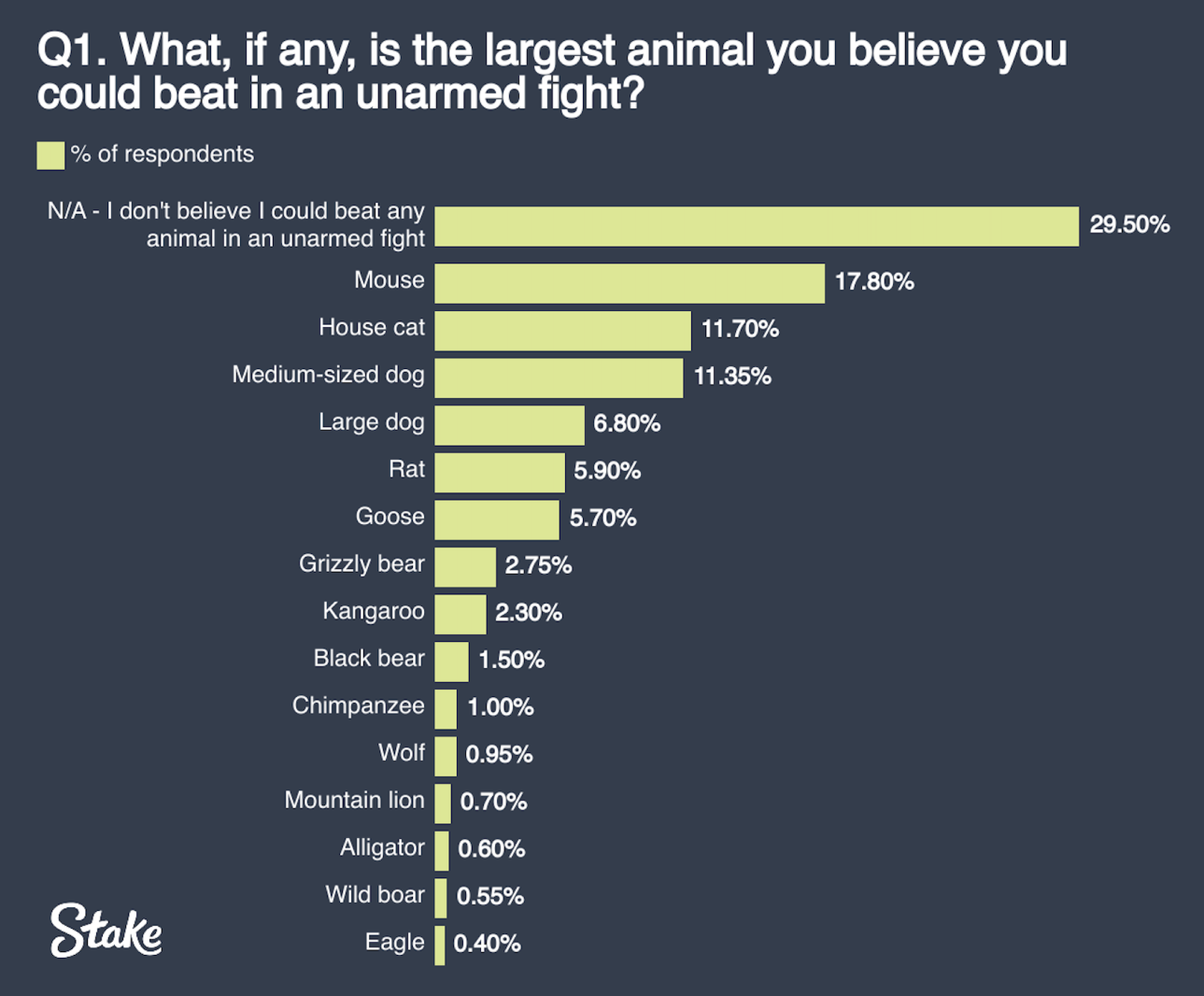
A recent survey conducted by Stake revealed that only about 3% of Americans believe they could defeat a grizzly bear in an unarmed fight, a decrease from the 6% who thought they could four years ago. The survey targeted 2,000 US sports fans, particularly UFC/MMA enthusiasts, to gauge their confidence in facing off against various animals. While nearly 30% admitted they couldn't beat any animal, the majority of respondents (70.50%) believed they could take down at least one creature. Confidence was highest against smaller animals like mice, house cats, and medium-sized dogs, with fewer respondents feeling they could defeat rats or geese.
Despite the optimism displayed by some participants, the survey highlighted the formidable strength of animals like kangaroos and grizzly bears, whose bite force and paw swipes far exceed human capabilities. The average punching power of a human, measured at 140 psi, pales in comparison to the force exerted by these animals. Interestingly, younger Americans, particularly those aged 16-24, exhibited the highest levels of fighting confidence, suggesting a generational trend in perceived combat abilities.
In a separate viral TikTok video by screenshothq, women were asked if they would rather be stuck in a forest with a man or a bear, with the majority choosing the bear without hesitation. This preference for facing a bear over a human may reflect a sense of adventure or bravado among the respondents. However, wildlife experts like Andy Tri from the Minnesota DNR caution against engaging with wild animals, emphasizing the importance of leaving them undisturbed in their natural habitats.
In conclusion, the Stake survey sheds light on the varying levels of confidence Americans have in their ability to defeat animals in unarmed combat. While some individuals may feel prepared to take on certain creatures, the physical capabilities of animals like kangaroos and grizzly bears serve as a stark reminder of the challenges posed by such encounters. It is essential to respect wildlife and avoid unnecessary interactions to ensure the safety of both humans and animals.