U.S. Military Interventions in Latin America: A History of Controversy and Conflict
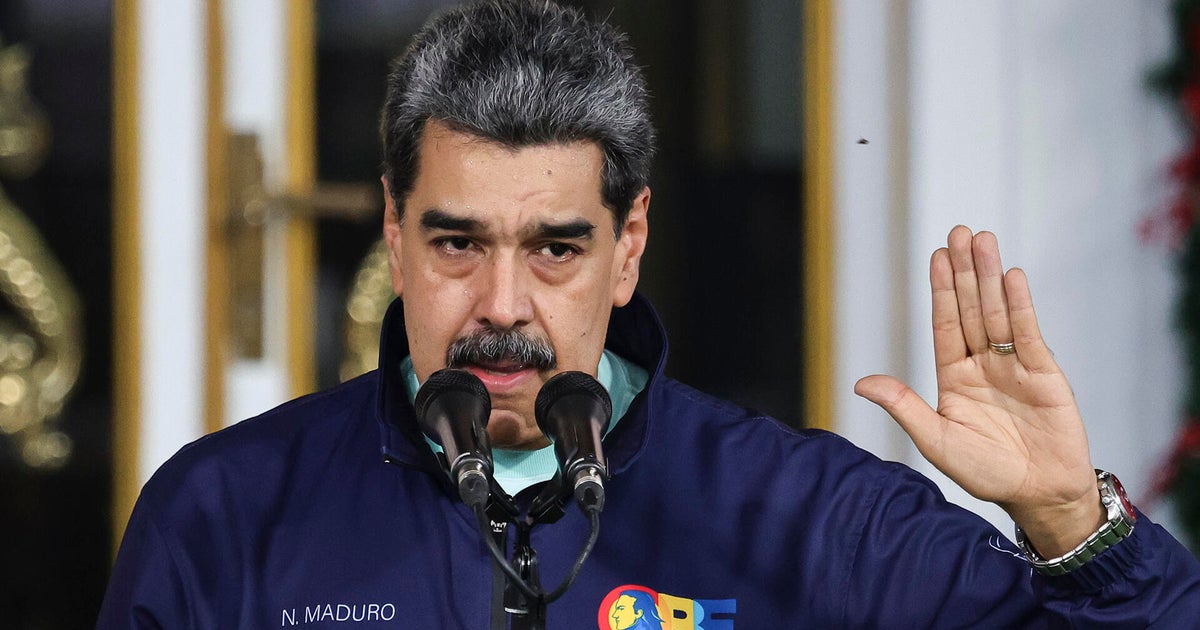
The United States conducted a significant military strike in Venezuela, capturing President Nicolas Maduro and his wife. The U.S. stated that Maduro would face criminal charges in the U.S. due to previous indictments. This action is part of a long history of U.S. military interventions in Latin America. Here are some major interventions since the Cold War.
In 1954, the U.S. orchestrated a coup in Guatemala to remove President Jacobo Arbenz Guzman, who had implemented land reforms that threatened the interests of the United Fruit Corporation. The CIA's involvement in this coup was officially acknowledged in 2003.
In 1961, Cuban exiles trained by the CIA launched the Bay of Pigs invasion to overthrow Fidel Castro's government in Cuba. The mission failed, leading to further unsuccessful attempts to remove Castro from power.
In 1965, the U.S. sent troops to the Dominican Republic to suppress an uprising in support of leftist President Juan Bosch. Throughout the 1970s and 1980s, the U.S. supported military dictatorships in Latin America to counter left-wing movements.
The U.S. backed Chilean dictator Augusto Pinochet and supported the Argentine junta during the \"dirty war\" that resulted in the disappearance of thousands of dissidents. The U.S. also aided counterrevolutionaries in Nicaragua and El Salvador, leading to prolonged civil wars and thousands of deaths.
In 1983, U.S. forces intervened in Grenada after the assassination of Prime Minister Maurice Bishop. The operation, known as \"Urgent Fury,\" aimed to protect U.S. citizens but was criticized by the United Nations General Assembly.
Maduro's capture in Venezuela echoes the arrest of former Panamanian dictator Manuel Noriega in 1989. Noriega, once a U.S. ally, fell out of favor with Washington, leading to a U.S. military invasion of Panama that resulted in casualties on both sides.