Exploring the Public Domain: Iconic Works from 1930 Now Free for Creative Reinterpretation
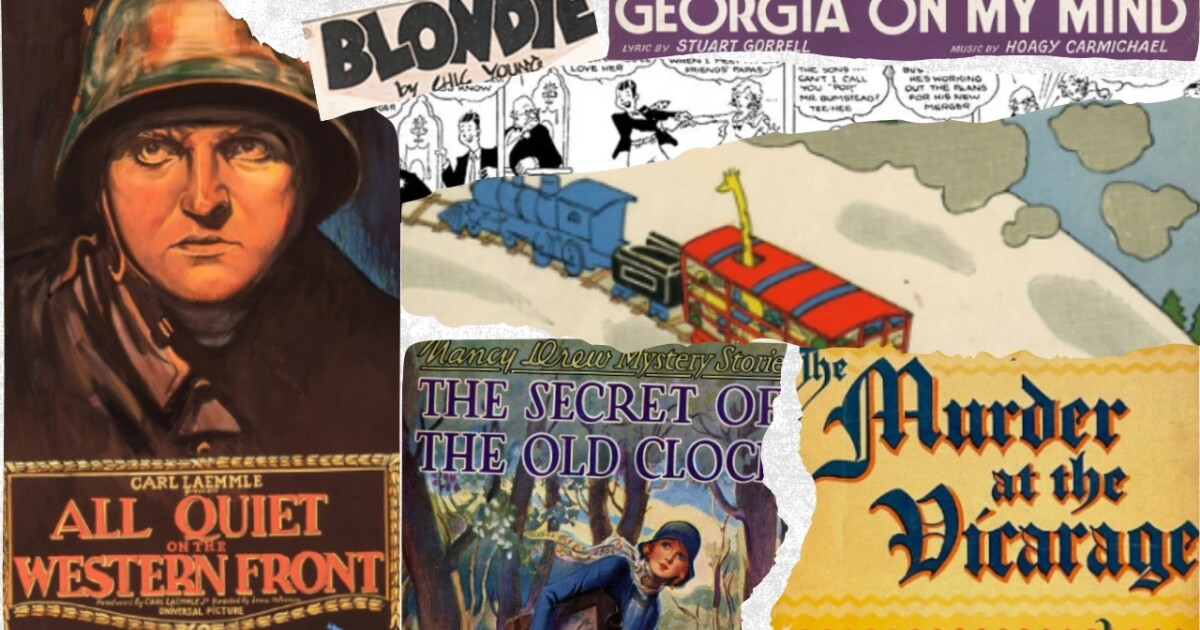
Numerous iconic works from 1930 have recently entered the public domain in the United States, including cartoons, books, movies, and songs. This change in copyright law allows artists to reinterpret these classic works in new creations and enables movie screenings to showcase the original films without any restrictions. Jennifer Jenkins and James Boyle from Duke Law School have provided detailed insights into the implications of this development and highlighted some of the major works affected by this change.
Among the books now in the public domain are literary classics such as William Faulkner's "As I Lay Dying," Dashiell Hammett's "The Maltese Falcon," and Agatha Christie's "The Murder at the Vicarage," featuring Miss Marple. Additionally, Noël Coward's "Private Lives" and the initial four Nancy Drew books by Carolyn Keene are now freely available for reinterpretation.
In the realm of animation, characters like Betty Boop and Disney's Pluto, originally introduced in 1930, have entered the public domain. However, it is essential to note that only the original versions of these characters are now free for creative use, similar to the status of Mickey Mouse, Popeye, and Winnie-the-Pooh.
Several notable movies from 1930 have also transitioned into the public domain, including Oscar winners like "All Quiet on the Western Front" and "Cimarron," as well as Bing Crosby's debut film "King of Jazz." These films predate the enforcement of the restrictive Hays Code, which regulated content related to crime, profanity, and sexuality on screen.
Furthermore, iconic songs by George and Ira Gershwin, such as "I Got Rhythm" and "Embraceable You," are now part of the public domain, along with popular tunes like "Georgia on My Mind" and "Dream a Little Dream of Me." These musical compositions can now be freely performed and shared without any licensing constraints.
In the realm of sound recordings, tracks like civil rights activist's "Nobody Knows the Trouble I've Seen," Bessie Smith and Louis Armstrong's "The St. Louis Blues," and Gene Austin's "Yes Sir, That's My Baby" from 1925 are now accessible to the public without any legal barriers. This shift allows community theaters to screen films, youth orchestras to perform music, and online platforms to distribute these works more widely.
The availability of these newly public domain works not only offers audiences the chance to rediscover and appreciate these cultural treasures but also serves as a source of inspiration for creating fresh artistic endeavors. Just as "Wicked" drew inspiration from Frank L. Baum's "The Wizard of Oz," these classic works can spark new creative projects across various artistic mediums.