Jem and the Holograms: A Disappointing Live-Action Adaptation
In every era, there emerges a young woman who leads a double life as a pop star. For those who grew up in the 2000s, that iconic figure was Miley Stewart/Hannah Montana, portrayed by Miley Cyrus. However, for those who were children of the 1980s, the legendary character was Jerrica Benton, who transformed into the vibrant pink-haired lead singer Jem of Jem and the Holograms.
The animated series "Jem and the Holograms," developed by Hasbro, Sunbow Productions, and Marvel Productions, quickly gained a devoted fanbase during its three-season run from 1985 to 1988. Jem, along with her bandmates, navigated through challenges from greedy executives and rival music groups while maintaining a foster home for girls. With the help of Synergy, a hologram-projecting computer, and her super-earrings, Jem concealed her true identity while captivating audiences on stage.
Director Jon M. Chu, known for his diverse portfolio, took on the task of bringing "Jem and the Holograms" to the big screen. The live-action adaptation, produced as a Blumhouse project on a modest budget of $5 million, failed to capture the grandeur expected from Chu's previous works. The film's lackluster performance at the box office and negative reviews in 2015 contributed to its underwhelming reception.
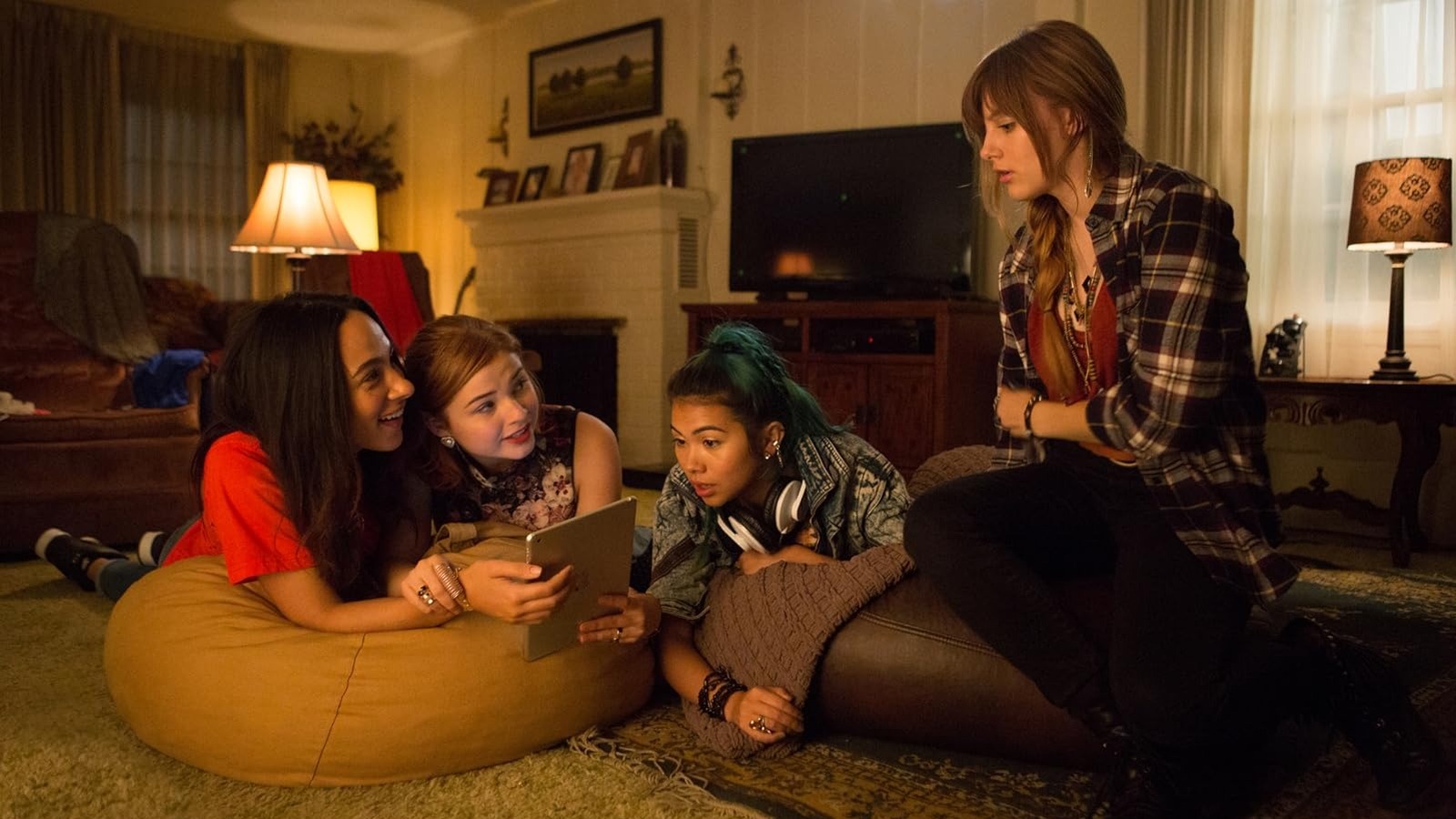
Unlike the original cartoon, which focused on Jem's dual identity, the movie adaptation took a different approach. Jem/Jerrica and her band, portrayed as modern-day sisters, gained fame through a viral YouTube video. The character of Erica Raymond replaced the original show's antagonist, Eric Raymond, while Synergy was reimagined as 51N3RG.Y, a robot guiding Jem and her siblings on a quest left by her father.
The main critique of "Jem and the Holograms" lies in its departure from the animated series' unique elements. The film opts for a conventional rise-to-fame narrative with superficial messages about family and authenticity. The movie's musical performances lack the energy and excitement needed to engage the audience, relying on dim lighting to mask the small concert crowds.
Rather than showcasing Jem and her sisters' artistic talents, the film dedicates significant screen time to YouTube fan testimonials. These clips, featuring real fans of the original animated series, were repurposed to create the illusion of support for the live-action adaptation. The disconnect between the fans' loyalty to the cartoon and the film's portrayal of Jem and her family is evident in their attire and expressions.
In conclusion, "Jem and the Holograms" failed to capture the essence of the beloved animated series, opting for a generic storyline and lackluster musical performances. Despite the film's attempt to modernize the characters and their journey to stardom, it fell short of resonating with both fans of the original series and new audiences.