Surviving the Holiday Travel Rush: Tips for a Smooth Journey
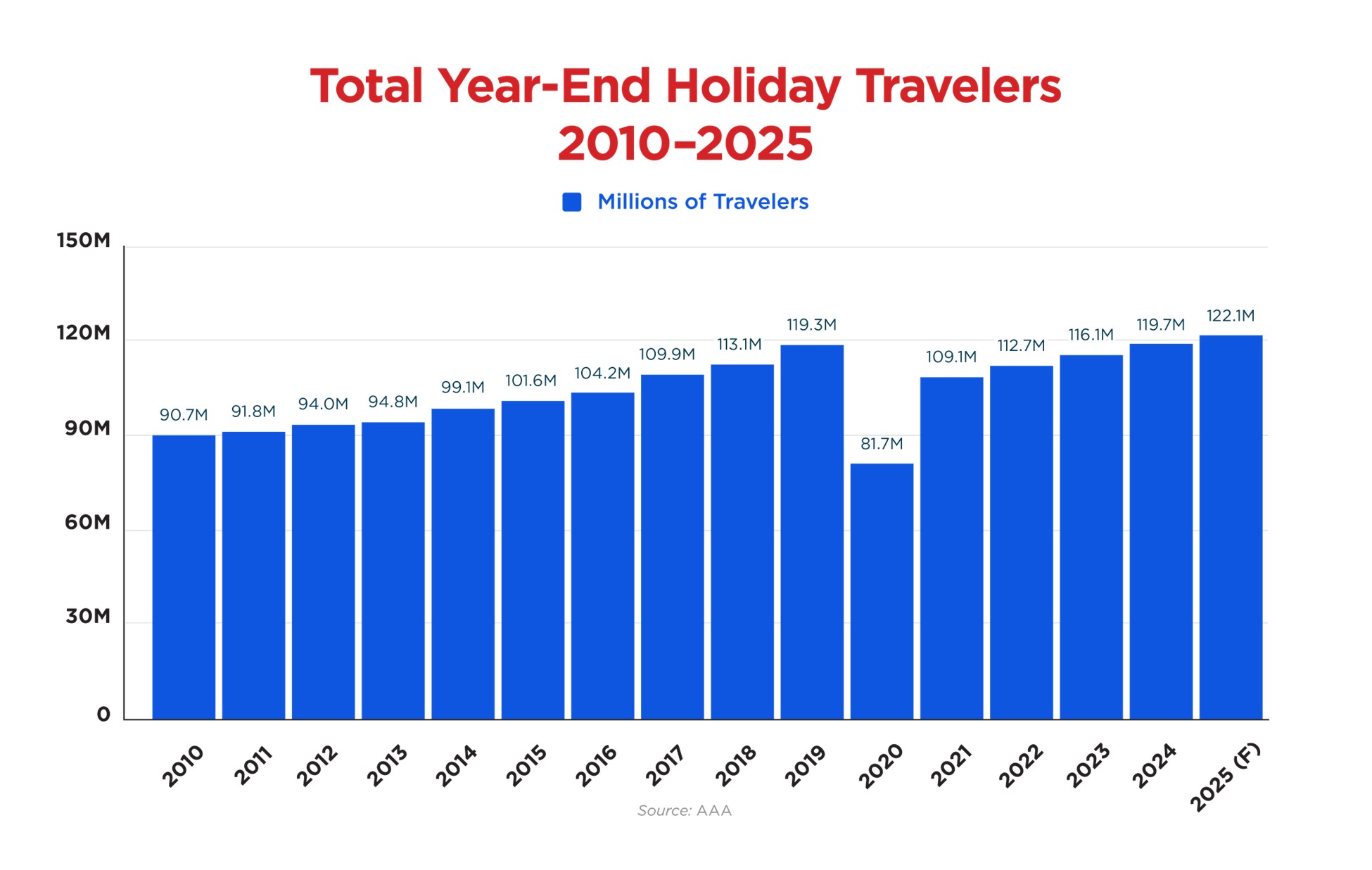
The holiday travel season is in full swing, with a record number of Americans expected to travel between December 20 and January 1. Around 122.4 million people are anticipated to travel, surpassing last year's numbers. While most travelers will opt for road trips, approximately 8.03 million are expected to fly, and there is a 25% increase in demand for cruising.
According to AAA, the cost of domestic flights has increased by about 7% compared to last year, with the most expensive days being leading up to Christmas and New Year's. Popular domestic destinations include Floridian cities like Orlando, Fort Lauderdale, and Miami, as well as Anaheim, California, and Honolulu, Hawaii. International travelers are also heading to tropical locations like Cancun, Mexico, Punta Cana, Dominican Republic, Cozumel, Mexico, and San Jose, Costa Rica.
To avoid heavy traffic, travelers should plan their trips strategically. The least congested days are Christmas Eve, Christmas Day, New Year's Eve, and New Year's Day. For road trips, it's best to avoid driving after 9 p.m. on December 20 and before 1 p.m. on December 21 through 23. After Christmas, traffic is lighter before 11 a.m. from December 26 to 28 and before 10 a.m. on December 29 and 30.
During the holiday season, the busiest days for travel are expected to be the Saturday and Sunday before Christmas and the day after the holiday. Heavy traffic is anticipated between noon and 8 p.m. on December 20, and from 1 p.m. to 7 p.m. on December 21 to 23. Additionally, drivers can expect congestion between 11 a.m. and 8 p.m. on December 26 and 28, from noon to 8 p.m. on December 29, and from noon to 7 p.m. on December 30.
In conclusion, holiday travel is expected to be busier than ever this year, with travelers seeking warmer destinations for their year-end getaways. Planning ahead and avoiding peak travel times can help make the journey smoother for everyone.