Reimagining Oz: Exploring Key Visuals in 'Wicked: For Good
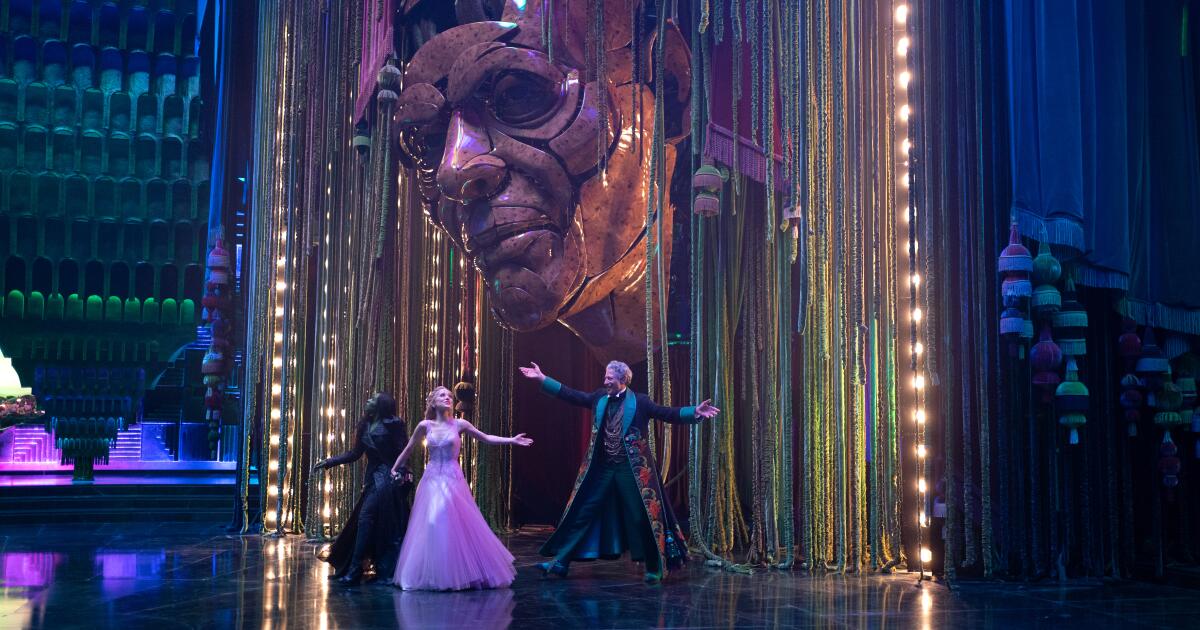
In "Wicked: For Good," a film directed by Jon M. Chu, viewers are taken on a journey that reimagines the events surrounding Dorothy's arrival in Oz. The movie cleverly references the classic imagery from the 1939 film "The Wizard of Oz" and provides new insights and deeper meanings to familiar visuals. Here, we explore five key visuals from "The Wizard of Oz" that are remixed in "Wicked: For Good."
The opening scene of the film reveals that the road map to Emerald City, seen in "The Wizard of Oz," was actually a form of visual propaganda created to reinforce the Wizard's rule in Oz. The road is built using slave labor, with captured animals forced to work under oppressive conditions. This sets the tone for the heavy themes explored in the story.
The yellow brick road, a symbol of hope and adventure in "The Wizard of Oz," takes on a darker meaning in "Wicked: For Good." The road is built by enslaved animals and drained of color, reflecting the oppressive regime in Oz. The juxtaposition of the road with a field of yellow tulips adds a seductive element, mirroring the Wizard's deceptive nature.
The iconic phrase "There's no place like home" takes on a new significance in "Wicked: For Good." When Elphaba sees animals fleeing Oz, she urges them to fight for their home, even as it rejects them. The rallying cry becomes a symbol of resistance and defiance against injustice.
In a powerful musical moment, Cynthia Erivo delivers a galvanizing anthem that calls for unity and action. The emotional impact of the song is heightened by the visual representation of animals created in postproduction. The scene underscores the challenges faced by those who stand up for their community in the face of adversity.
The silver heels worn by Nessarose in "Wicked: For Good" pay homage to the original novel by L. Frank Baum, while also alluding to the red shoes of the Wicked Witch of the East. The scene where Nessarose hovers midair captures a fleeting moment of happiness, contrasting with the tragic events that follow. The costume design includes subtle references to "The Wizard of Oz," adding depth to the characters.
Glinda's grand entrance in a floating bubble is revealed to be a deception orchestrated by the Wizard in "Wicked." The elaborate contraption mimics the Wizard's technology and adds to the illusion of Glinda's magical abilities. The costume design enhances Glinda's iconic image as a symbol of goodness and purity.
The climactic moment of the film reimagines the scene where the Wicked Witch is melted by water in "The Wizard of Oz." In "Wicked: For Good," Elphaba orchestrates her own demise by filling a bucket with water to fake her death. The emotional impact of the scene is heightened by Glinda's heartbreaking reaction, adding a layer of tragedy and beauty to the iconic moment.
In conclusion, "Wicked: For Good" offers a fresh perspective on the classic story of "The Wizard of Oz," reimagining familiar visuals and adding new layers of complexity to the characters and themes. The film explores themes of oppression, resistance, and sacrifice, creating a compelling narrative that challenges viewers to reconsider their understanding of this beloved tale.