Revolutionizing Stroke Care: Groundbreaking Robotic Thrombectomy Procedure
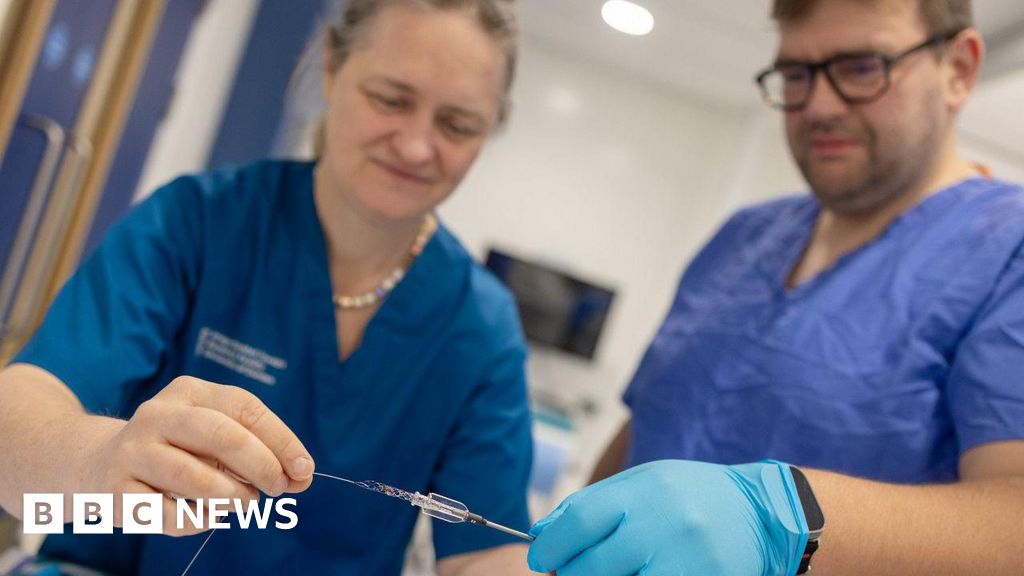
A groundbreaking stroke procedure using robotic technology was recently completed by doctors from Scotland and the US. Professor Iris Grunwald, based at the University of Dundee, performed a remote thrombectomy on a human cadaver using a robot. The procedure was carried out at Ninewells Hospital in Dundee, while the body was located at the university across the city. This innovative approach has the potential to revolutionize stroke care and improve patient outcomes.
Following the successful procedure in Scotland, neurosurgeon Ricardo Hanel in Florida performed a transatlantic surgery using the same technology on a human body in Dundee, over 4,000 miles away. The team involved in this groundbreaking work believes that this technology could be a game-changer in stroke treatment if approved for use on patients. The ability to access specialist treatment remotely can significantly impact recovery chances for stroke patients.
The University of Dundee serves as the global training center for the World Federation for Interventional Stroke Treatment, offering a unique environment where doctors can practice procedures on cadavers with human blood circulation. This recent achievement marks the first time that a complete mechanical thrombectomy procedure was successfully performed on a real human body, showcasing the potential of this innovative technology in stroke care.
The use of robotics from the Lithuanian firm Sentante enabled the remote thrombectomy procedures in both Scotland and Florida. The team is now looking forward to participating in clinical trials next year to further validate the effectiveness of this approach. This groundbreaking work has the potential to address the challenges of accessing specialized stroke treatment and improve outcomes for patients worldwide.
In conclusion, the successful completion of remote thrombectomy procedures using robotic technology represents a significant advancement in stroke care. The collaboration between medical professionals in Scotland and the US has demonstrated the feasibility and potential benefits of this innovative approach. As further research and trials are conducted, this technology could revolutionize stroke treatment and provide new opportunities for patients to receive timely and effective care.