Deadheads: A Countercultural Movement or Spiritual Quest?
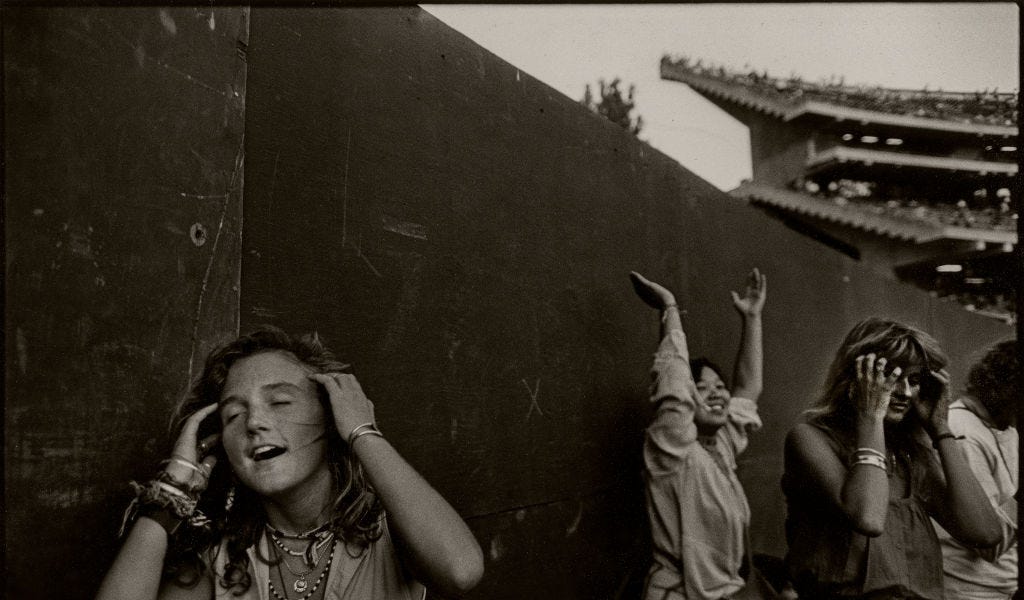
In the 1980s, a group of dedicated individuals known as Deadheads fully embraced the counterculture lifestyle associated with the Grateful Dead. These true devotees relinquished their material possessions, dropped out of school, and adopted a vow of poverty. They traveled the country, relying on begging for sustenance and rides, and dressed in tattered clothing, symbolizing their rejection of worldly possessions. Their simple diet consisted of rice and beans, and they often lived in old vehicles that served as their makeshift homes. Despite their unconventional lifestyle, they exuded a genuine and appreciative demeanor, finding joy in the simplest pleasures like nature's beauty or a warm meal. Their distinctive appearance included long, unkempt hair, a symbol of their anti-establishment beliefs.
Gathering in large numbers before their revered gurus, Deadheads engaged in ecstatic rituals, often enhanced by mind-altering substances. These gatherings were marked by intense physical movements and expressions of devotion, resembling religious ceremonies. Even though I was not a devoted follower, I attended some of these events during my teenage years. I vividly recall witnessing a young girl, adorned in ethereal attire, swaying and dancing in a trance-like state, passionately chanting the name of the main guru, "Jerry!" The fervor and intensity of their devotion blurred the lines between fanatical fandom and religious zeal.
The Deadheads' fervent dedication to the Grateful Dead and their counterculture lifestyle often drew comparisons to religious fanaticism. While initially perceived as remnants of the 1960s counterculture movement, their unwavering commitment to a communal and spiritual experience transcended mere fandom. As society transitions into an era marked by increasing secularism, the Deadheads' unconventional practices and communal ethos offer a glimpse into a universal longing for connection and transcendence that transcends cultural boundaries. In a world where organized religion is on the decline, the Deadheads' pursuit of a shared spiritual experience may hold a deeper significance that resonates across diverse cultures and belief systems.