Philippine President Marcos Addresses Corruption Scandal and Promises Accountability
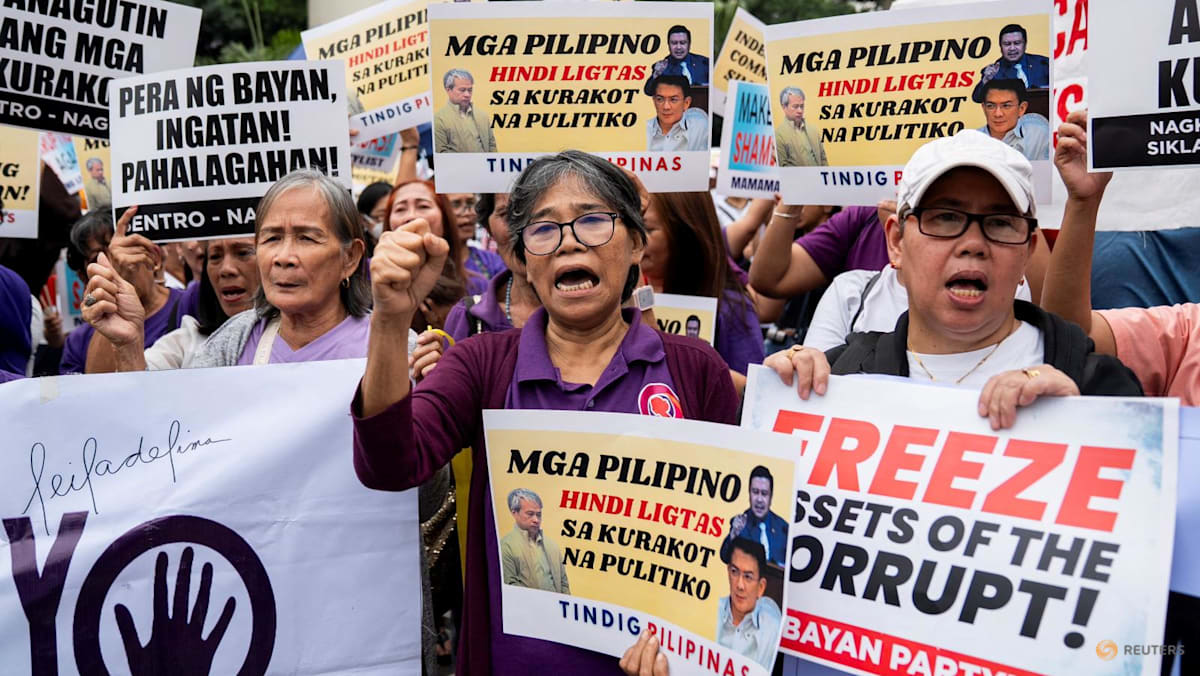
Philippine President Ferdinand Marcos addressed the growing anger over a corruption scandal involving fake flood control projects, stating that he understood the public's frustration with the situation. Recent protests in Manila, including one by 3,000 students at the University of the Philippines, have highlighted the issue. The upcoming annual protest related to the 1972 martial law declaration is expected to draw significant crowds, leading to the army being placed on high alert as a precaution. Marcos emphasized that he did not blame the protesters for expressing their anger and desire for justice.
During a press briefing, Marcos appointed a former Supreme Court justice to lead an investigatory body to look into the corruption scandal. He acknowledged the public's right to be enraged and disappointed by the situation, stating that it was justified. Marcos also reiterated that his friends and allies would not be exempt from scrutiny, including his cousin, House Speaker Martin Romualdez, who has been implicated in the scandal. Romualdez, along with other lawmakers, has been under scrutiny following accusations made by witnesses during hearings.
The scandal involving cash payments to nearly 30 House members and Department of Public Works and Highways (DPWH) officials has raised concerns about corruption in flood control projects. Marcos announced the formation of a three-person commission, led by former Supreme Court justice Andres Reyes, to investigate the past decade of flood control projects. While the commission will have the authority to hold hearings and review evidence, it cannot impose punishments unilaterally. The Philippines has a history of corruption scandals involving public funds, with little accountability for high-ranking officials found guilty of corruption.
The Department of Finance estimated that the Philippine economy suffered significant losses due to corruption in flood control projects, amounting to billions of pesos. Vince Dizon, an economist and political aide, recently assumed leadership of the DPWH to address the agency's tarnished reputation. The appointment of a commission to investigate the corruption scandal reflects the government's commitment to addressing public concerns and holding accountable those involved in fraudulent activities. The public outcry and protests underscore the importance of transparency and accountability in government projects to prevent future corruption scandals.