Racing Safety Evolution: The Farewell to Banked Corners in Formula 1
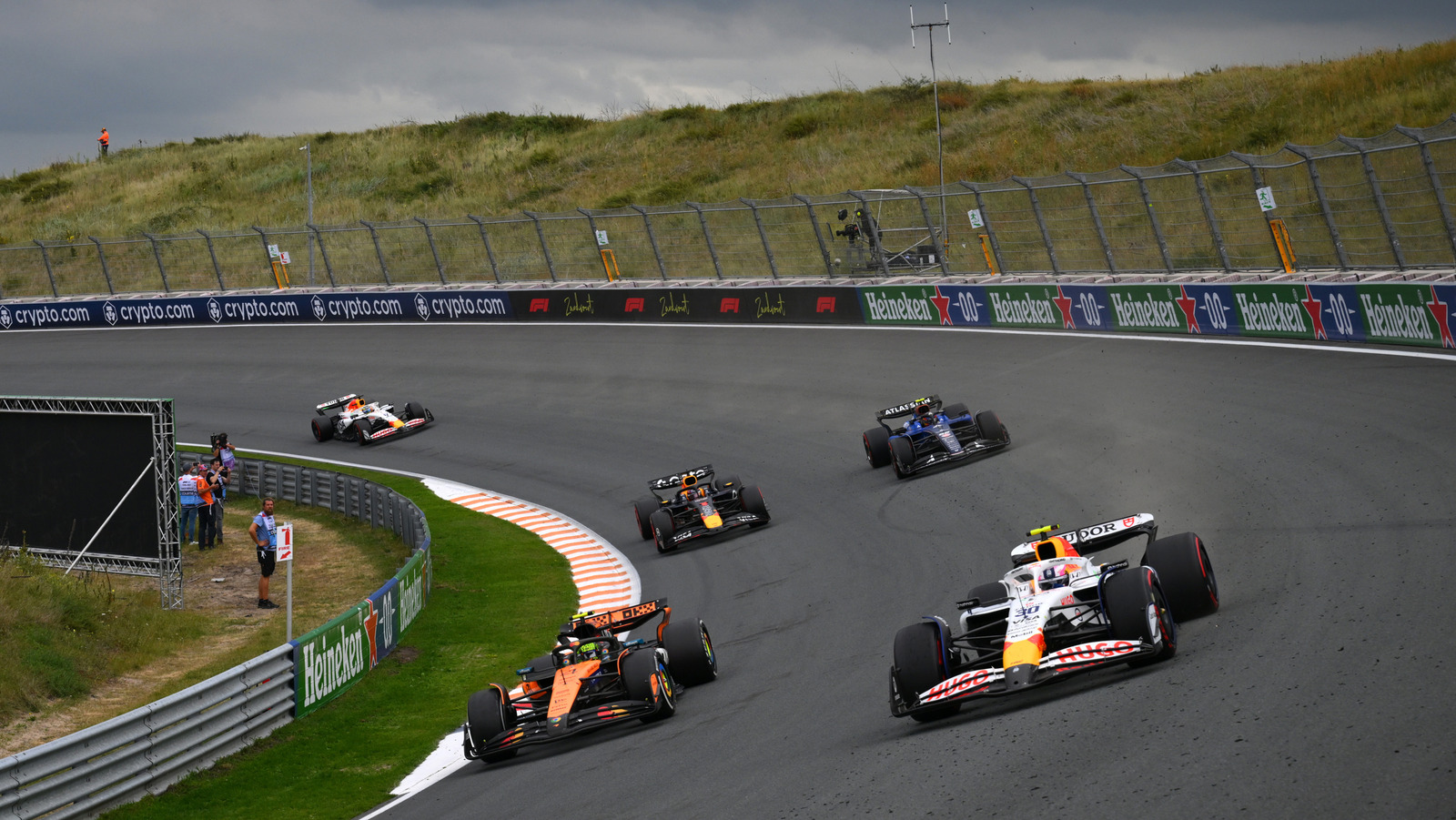
Formula 1 will bid farewell to the Netherlands after the 2026 season, marking the end of a five-year run at Zandvoort. The departure from the Dutch circuit also means saying goodbye to the unique steeply-banked corners that added excitement to the races. The Fédération Internationale de l'Automobile (FIA) has strict regulations regarding banked turns on racing circuits, only allowing exemptions under specific criteria. Despite the thrill of higher speeds on banked corners, safety concerns have led to their exclusion from top-level competitions since 1969.
The history of racing safety regulations is often shaped by tragic incidents that highlight the importance of prioritizing safety. Autodromo Nazionale di Monza in Italy, known for its banked circuit, witnessed fatal accidents during FIA-sanctioned events in the 1960s, prompting a reevaluation of circuit design standards. The death of Ferrari driver Wolfgang von Tripps during the 1961 Italian Grand Prix at Monza's road-oval course marked a turning point in safety considerations for high-speed racing.
While von Tripps' accident did not occur on the banked section of Monza's track, the extreme speeds reached on the circuit raised concerns about the safety of sustained high-speed racing. Following the tragic incident, F1 ceased using the 6.2-mile combined road-oval layout at Monza, transitioning to the current configuration. The FIA's regulations, outlined in Appendix O of the International Sporting Code, explicitly prohibit the inclusion of banked corners in modern racing circuits.
Despite the ban on banked corners in international racing, some exceptions exist for American oval tracks. The Lausitzring oval in Germany, constructed in 1998, features a modest 5.7° banking angle to accommodate racing events. Recent circuit designs have embraced innovative features to enhance racing excitement, such as the revamped Turns 3 and 14 at Zandvoort, which were modified to facilitate overtaking opportunities for F1 races. The redesign of the final corner, named after Arie Luyendyk, includes a 32° banking angle to enable F1 cars to navigate the turn at full throttle safely.
While Formula 1 will no longer visit Zandvoort after 2026, the era of banked corners in racing is not over. The upcoming Madring street circuit in Madrid, set to host the Spanish Grand Prix, will feature a bullring-like banked turn, adding a unique challenge for drivers and maintaining the tradition of exciting circuit designs in motorsport. The evolution of circuit design continues to shape the future of racing, balancing speed and safety for an exhilarating spectator experience.