President Trump's Role in International Conflict Resolution: A Closer Look at Ceasefires and Uncertain Outcomes
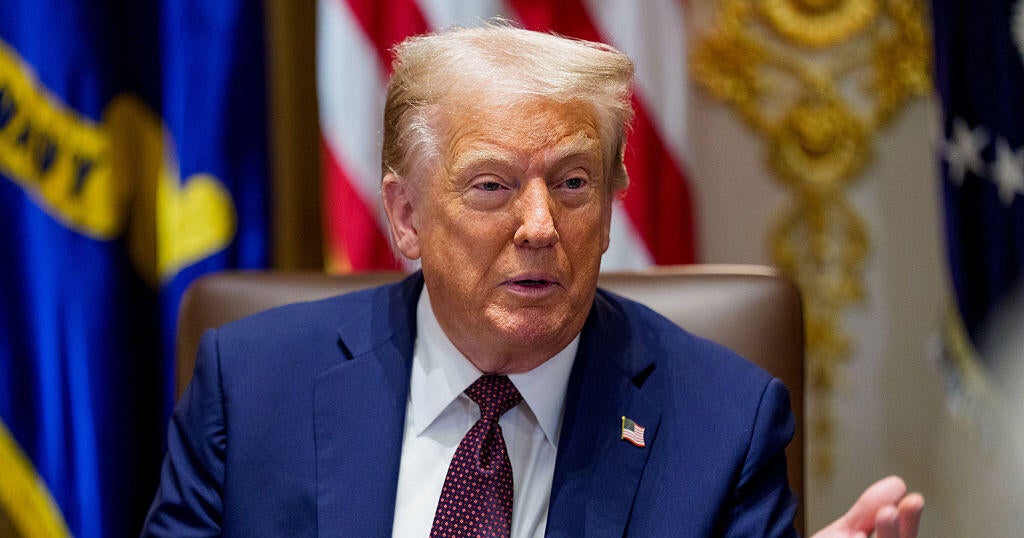
President Trump has been vocal about his role in ending several conflicts around the world, claiming credit for settling six or seven wars during his presidency. The White House provided a list of seven conflicts, including Israel and Iran, Rwanda and Democratic Republic of the Congo, Armenia and Azerbaijan, Thailand and Cambodia, India and Pakistan, Egypt and Ethiopia, and Serbia and Kosovo. While some experts acknowledge Mr. Trump's involvement in brokering ceasefires, the resolution of these conflicts remains uncertain. The President's role in each conflict varies, with some instances showing limited U.S. involvement and unclear outcomes.
In one instance, a ceasefire was reached between Israel and Iran after a 12-day conflict that resulted in casualties on both sides. Mr. Trump claimed to have ordered U.S. airstrikes on Iran's nuclear facilities and urged Israel to halt further attacks. While some experts credit the President for the ceasefire, tensions between the nations persist, and the impact on Iran's nuclear program remains uncertain. Similarly, peace efforts between Rwanda and the Democratic Republic of Congo have faced challenges, with ongoing accusations of violations from both sides.
Another conflict involving Armenia and Azerbaijan saw an agreement facilitated by Mr. Trump to normalize relations and reopen transportation routes. While the deal is seen as a step forward, it requires further ratification, with unresolved issues such as territorial claims. In the case of Thailand and Cambodia, a ceasefire was achieved following threats of trade consequences from President Trump. However, border disputes and accusations of landmine laying continue to pose challenges to lasting peace.
India and Pakistan agreed to a ceasefire after cross-border conflicts over Kashmir, with both nations claiming the region as their own. While Pakistan credited U.S.-led talks for the ceasefire, India emphasized its own pressure on Pakistan as a driving force. The dispute remains unresolved, with future negotiations potentially complicated by trade tensions between India and the U.S. Mr. Trump also intervened in the conflict between Ethiopia and Egypt over a hydroelectric dam, suspending aid to Ethiopia to push for a resolution. Despite claims of peace, the long-term stability of these conflicts remains uncertain.
In conclusion, President Trump's involvement in resolving international conflicts has been met with mixed reactions from experts. While some acknowledge his role in brokering ceasefires and agreements, the lasting impact and resolution of these conflicts remain uncertain. The complexities of each conflict, coupled with ongoing tensions and unresolved issues, highlight the challenges of achieving lasting peace in these regions.