Taylor Swift: A Literary Muse in Pop Music
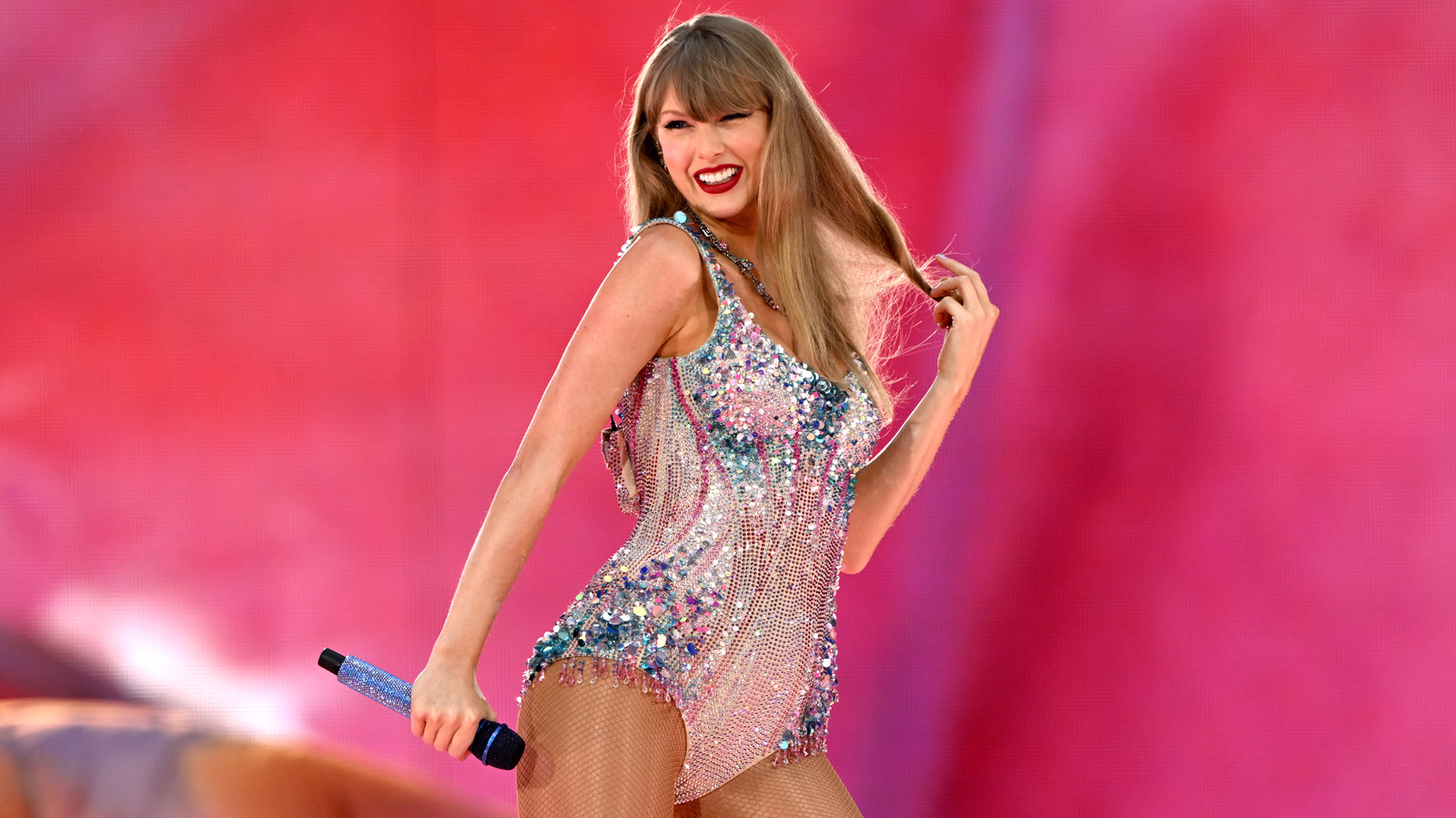
Taylor Swift is not just a pop sensation; she is also a talented wordsmith who has been compared to great poets and songwriters. Her ability to weave subtle references to novels, TV shows, and films into her songs is impressive. From classic literature like Daphne du Maurier's \"Rebecca\" to F. Scott Fitzgerald's \"The Great Gatsby,\" Swift's songs are filled with nods to various works of fiction.
In her song \"tolerate it\" from the album \"evermore,\" Swift drew inspiration from \"Rebecca\" by Daphne Du Maurier, reflecting on the theme of feeling tolerated in a relationship. The haunting atmosphere of the novel resonated with Swift, leading her to create one of her most emotionally impactful songs. The connection between the book and the song adds depth to Swift's storytelling.
Swift's references to \"The Great Gatsby\" can be found in songs like \"This is Why We Can't Have Nice Things\" and \"happiness.\" The tragic love story of Jay Gatsby and Daisy Buchanan serves as a backdrop for Swift's lyrics, adding layers of meaning to her music. By incorporating elements from classic literature, Swift infuses her songs with timeless themes of love and loss.
In \"Getaway Car,\" Swift alludes to the film \"Bonnie & Clyde\" and Charles Dickens' \"A Tale of Two Cities.\" The song captures the essence of a tumultuous relationship, drawing parallels to the infamous criminal couple. Swift's clever wordplay and storytelling skills shine through in her references to iconic works of fiction.
Swift's mention of \"The Secret Garden\" in the song \"I Hate It Here\" showcases her affinity for classic children's literature. The story of Mary Lennox and the hidden garden resonates with Swift, who uses the imagery of a secret oasis to convey personal struggles and growth. By referencing beloved literary works, Swift adds a nostalgic and introspective touch to her music.
In her song \"Who's Afraid of Little Old Me?\" from the album \"The Tortured Poets Department,\" Swift pays homage to the film \"Who's Afraid of Virginia Woolf?\" The complex dynamics of relationships portrayed in the movie mirror Swift's own experiences, highlighting the parallels between art and life. Swift's ability to draw inspiration from cinematic masterpieces adds depth and richness to her songwriting.
Swift's references to \"Alice's Adventures in Wonderland\" in songs like \"Long Story Short\" and \"Wonderland\" showcase her whimsical and imaginative side. The fantastical world of Alice resonates with Swift, who uses the imagery of falling down the rabbit hole to explore themes of self-discovery and transformation. By incorporating elements from classic literature, Swift creates a dreamlike and enchanting atmosphere in her music.
Lastly, Swift's nods to Peter Pan in songs like \"cardigan\" and \"Peter\" reflect her longing for eternal youth and love. The timeless tale of Peter Pan and Wendy resonates with Swift, who explores themes of nostalgia and lost innocence in her music. By drawing parallels between her own experiences and the iconic story, Swift adds a touch of magic and wonder to her storytelling.
In conclusion, Taylor Swift's ability to incorporate references to literature, films, and TV shows in her music showcases her versatility as a songwriter. By drawing inspiration from classic works of fiction, Swift adds depth, emotion, and complexity to her songs, creating a rich tapestry of storytelling that resonates with audiences worldwide.